
The country's exports in December surged 37 per cent on an annual basis to $37.29 billion, the highest-ever monthly figure, government data showed on Monday.

The decline in gold imports has helped in narrowing the country's trade deficit to $106.84 billion during the eight-month period under review as against $133.74 billion in the year-ago months.

In January last year, the US signed the first phase of the trade deal with China, which former President Donald Trump described as historic, concluding more than a year of tough negotiations including several months of suspension of talks between the two largest economies of the world.
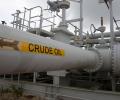
India's imports from Russia rose by about 67 per cent to $30.42 billion during the April-September period this fiscal on higher shipments of crude oil and fertiliser, according to the commerce ministry data. With this, Russia has become India's second-largest import source during the first half of this fiscal. The imports were $18.24 billion during April-September 2022.

Imports increased by 21.7 per cent to $39.5 billion in October, according to data released by Commerce Secretary Rahul Khullar in New Delhi on Tuesday.

The central government is on track to meet its fiscal deficit target of 6.4 per cent of the GDP for 2022-23 on the back of strong growth in revenue collections, the World Bank said in its India Development Update on Tuesday. High nominal GDP growth in the first quarter supported strong growth in revenue collection, especially Goods and Services Tax (GST), despite tax cuts on fuel. Notwithstanding an increase in spending due to expanded fertilizer subsidies and food subsidies for vulnerable households in response to the commodity price shock, the government is on track to meet its FY22/23 fiscal deficit target of 6.4 per cent of GDP and the general government deficit is projected to decline to 9.6 per cent from 10.3 per cent in FY21/22 and 13.3 per cent in FY20/21.

Few finance ministers announce any taxation measure that could upset the stock market. Ms Sitharaman decided to take that risk, observes A K Bhattacharya.

While SGBs are a sound investment, they aren't worth buying at any price. The interest income you earn from them will not justify paying a high premium.

Subdued demand from developed countries and blocs like the US and EU is impacting exports of key sectors including engineering, gems and jewellery and may have implications on India's exports in case the global situation does not improve in coming months. Global inflation, Russia-Ukraine war, simmering China-Taiwan crisis and supply disruptions are hurting economic growth worldwide, leading to poor demand, experts say. The world merchandise trade volume is expected to grow 3 per cent in 2022 against the earlier forecast of 4.7 per cent, mainly due to the ongoing war between Russia and Ukraine, according to the World Trade Organization forecast, released in April.

There is no direct impact of the Russia-Ukraine crisis on India in terms of bilateral trade but a surge in oil prices poses considerable risk to the economy, an analyst report said on Friday. International oil prices which have surged past $100 per barrel "pose risks to external stability and currency movement," a Bank of Baroda Economics Research report said. Russia has launched military operations against Ukraine, stoking fears of significant disruption in the region, including loss of life. The West is ramping up financial sanctions against Russia and support for Ukraine.

Imports too rose by 0.46 per cent to $34.25 billion during the month under review, leaving a trade deficit of $10.36 billion.

'All sorts of tactics are used on political adversaries.'

We are looking at bringing quality control orders for mass production items such as smart meters and ceiling fans. This will benefit our own industry and consumers, a government official said.

Trade deficit marginally widened to $9.85 billion as against $9.72 billion in February 2019.

During the meeting, the US said it will not add new tariffs on Chinese exports, China's state -run China Daily reported.

India's current account slipped into a deficit of $9.6 billion or 1.3 per cent of GDP in the September quarter, the Reserve Bank said on Friday. The current account, which records the value of exports and imports of both goods and services along with international transfers of capital, was in a surplus mode both in the quarter-ago and year-ago periods. India's current account surplus had stood at $6.6 billion or 0.9 per cent of GDP in the April-June 2021 quarter, while in the year-ago period (Q2FY22), the surplus had stood at $15.3 billion or 2.4 per cent of the GDP, the data said.

Out of 30 key export sectors, as many as 22 showed negative growth in September.

Two-time Olympic medallist PV Sindhu overcame a sluggish start to defeat world number seven Han Yue of China in a thrilling contest, progressing to the quarterfinals of the Denmark Open Super 750 badminton tournament on Thursday.

CAD refers to the difference between inflow and outflow of foreign exchange that has a bearing on exchange rate.

Mumbai, May 14 (PTI) The massive spike in trade deficit caused by sharp rise in gold imports in April would not sustain and there is no need to get excessively worried over the data, analysts have said. They also said the current account deficit or the difference between the foreign exchan ...

The economy may grow by around 7 per cent this financial year as estimated by the Monetary Policy Committee (MPC) of the Reserve Bank of India (RBI), say economists with various organisations. The first advance estimates for 2023-24 will be released on Friday by the National Statistical Organisation (NSO), an exercise done for calculating ratios such as the fiscal deficit. The interim Budget will be presented on February 1.

The trade deficit marginally narrowed to $12.5 billion last month from $12.8 billion in July.

The two leaders also took positive note of the growing bilateral cooperation in defence, counter-terrorism and energy, besides the co-ordination on regional and global issues, the officials said.
With trade deficit falling 24% in Apr-Dec and stable capital flows, FY14 may end with a balance-of-payments surplus.

'They are geopolitical, commercial, educational, cultural and about innovation.' 'Also, they are about a common value system.'

What stood out in his 15-year journey as a member of the political executive at the Centre was his glowing record as India's most successful and effective finance minister. Both as prime minister and finance minister, he understood the importance of gradualism, except when the economy or the polity was in a crisis.

The current account deficit, the difference between outflow and inflow of foreign exchange, would be about 2.3 per cent of gross domestic product because of the fall in gold and non-essential imports, the financial services major said in a report.

The recent stimulus measures announced by China have seen most analysts sit up and take notice.
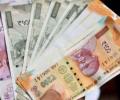
The rupee slipped 13 paise to 77.67 against the US dollar in early trade on Tuesday, weighed down by the surge in crude oil prices. At the interbank foreign exchange, the rupee opened at 77.65 against the American dollar, then lost ground to quote at 77.67, registering a fall of 13 paise from the last close. On Monday, the rupee settled at 77.54 against the US dollar.
India's exports jumped 45.17 per cent to $33.14 billion in August as against $22.83 billion in the same month last year, according to the commerce ministry's provisional data. The exports during April-August 2021 stood at $163.67 billion, an increase of 66.92 per cent over $98.05 billion in the same period a year ago, the data showed.
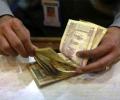
Weakness in other currencies against the dollar overseas, after US Fed indicating interest rates could rise earlier than expected as the jobs market picking up, also put pressure on the local unit, forex dealers said.

Exim Bank pointed out that recent performance of the manufacturing sector in India is indicative of an underlying inertia.
The country's current account deficit is likely to decline to 1.1-1.2 per cent of the gross domestic product in the third quarter, say rating agencies.

In FY 2012-13, the country's merchandise exports had aggregated at $ 300.4 billion.

"According to the global financial services major, though CAD at 3.2 per cent of GDP is significantly lower than the 4.8 per cent it registered in fiscal year 2012-13 ", it still remains higher than the 2.4 per cent of GDP that we estimate as the optimal current account deficit".

Imports too rose by 10.4 per cent to $37.8 billion during the last month, leaving a trade deficit of $12 billion.

The Indian rupee is expected to trade between 80 and 84 against dollar in the first three months of 2023 with support from overseas inflows though worsening current account deficit (CAD) and reduced interest rate differential between the US and India pose challenges. According to a Business Standard Poll of 10 participants, most said the rupee could gain strength in January due to foreign inflows, and the Reserve Bank of India (RBI) is not expected to allow the currency to depreciate ahead of the Union Budget scheduled on February 1. The rupee depreciated 10.15 per cent in 2022, its worst performance since 2013 as the war in Europe and the interest rate increase by the US Federal Reserve prompted investors to flee emerging markets.
India needs to make use of this opportunity to significantly enhance its exports especially in information and communications technology and the automotive sector.

The country's exports jumped by 60.29 per cent to $34.45 billion in March even as the outbound shipments contracted by 7.26 per cent during the full 2020-21 fiscal to $290.63 billion. Imports too grew by 53.74 per cent to $48.38 billion in March, but dipped by 18 per cent to $389.18 billion during April-March 2020-21, according to the government data released on Thursday. Trade deficit during March 2021 widened to $13.93 billion from $9.98 billion in March 2020.
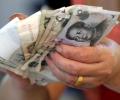
Yuan's fall would worsen India's trade deficit with China.
